Even the most careful business owners face Errors & Omissions exposures. That’s because you and your employees don’t have to actually do anything wrong to be accused of mistakes or oversights. E&O; Insurance protects you in the event that a customer or client is dissatisfied with your services and decides to sue you. In the event of such a lawsuit, your Errors & Omissions Insurance covers the costs of hiring a lawyer, funding a court defense, and paying any judgments or settlements for which you’re found liable. Because E&O; lawsuits can get expensive quickly, this type of insurance is crucial to protecting your business assets.
Cyber Liability Insurance protects small businesses from damages and expenses related to data breaches and other digital crimes. In fact, this coverage is often called Data Breach Insurance or Cyber Risk Insurance. If a virus infects your computer or a hacker steals your customers’ data, your Cyber Liability policy can cover the costs of damage control: alerting your customers, paying for credit monitoring services, defending your business in any lawsuits, and even funding good-faith PR campaigns to restore people’s confidence in your business.
Another name for Errors & Omissions Insurance, Professional Liability Insurance shields your business from mistakes or oversights you make in your professional capacity. In other words, if your work or failure to do your work as promised leads to a financial loss on the part of a client, you could be slapped with a Professional Liability lawsuit. Even if the charge proves frivolous, defending yourself in court can be costly because of lawyer’s fees, court fees, docket fees, and more. Your Professional Liability policy covers those costs so you don’t have to dip into your business assets.
A Certificate of Liability insurance acts as proof of insurance for your clients, customers, or business partners. This one-page document includes pertinent information about your insurance policies, including coverage start and end dates, policy limits, and parties insured. When potential partners want verification that your business is insured, you can show them your Certificate of Liability Insurance . Often, this single document allows business owners to close deals more quickly.
Business Interruption Insurance is a coverage included as an endorsement (that is, a special add-on) to Property Insurance policies. Its payouts replace business revenue that your business is unable to earn when it’s forced to shut its doors by a covered Property event (e.g., a fire). Business Interruption Insurance allows many small businesses to bridge the gap between when they’re forced to shut their doors and when they’re able to reopen by providing the funds needed to pay rent, employee salaries, loans, taxes, and more. Some Business Interruption policies even offer payments if a business is forced to shut down because of a covered Property event that happens to a supplier or business partner.
Whether you rely on a single laptop to run your business or a factory full of merchandise, chances are good that your business property is essential to maintaining your bottom line. Property Insurance lets you protect that property by providing the funds you need to replace or repair it when a covered event makes it unusable. Most Property policies cover fires, windstorms, theft, and vandalism. If you operate your business in an area that’s prone to floods, earthquakes, or hurricanes, you should consider investing in an event-specific endorsement to cover damage from those events.
General Liability Insurance is the starting point of coverage for most small-business owners. Regardless of industry, small businesses benefit from the protection provided by a GLI policy. General Liability Insurance protects small businesses against liability related to third-party property damage and bodily injury. In other words, if a non-employee is injured or has their property damaged on your business premises or because of something you or an employee did, your General Liability policy can cover the legal costs, should that party decide to sue.
The Business Owner’s Policy, or BOP, is an insurance bundle designed specifically for small-business owners. It combines Property and General Liability Insurance for a single discounted premium. As a bonus, many BOPs also include Business Interruption coverage. To qualify for a BOP, businesses must meet a number of criteria, including having a low risk profile, operating in relatively small business premises, and requiring no more than 12 months of Business Interruption coverage.
Hired & Non-Owned Auto Insurance offers protection for liability related to the operation of employee-owned or rented vehicles for business purposes. Often purchased as an endorsement to a GLI policy, HNOA helps cover the costs of accidents or injuries that happen while someone is operating a vehicle not owned by your company for company purposes.
Umbrella Insurance (also sometimes called Excess Liability Insurance ) offers a coverage cushion to multiple existing insurance policies (including General Liability, Auto Liability, and Employer’s Liability). When the cost of a claim to one of these policies exceeds that policy’s limit, Umbrella Insurance kicks in to cover the remainder so the business owner doesn’t have to dip into personal or business assets. Business owners can purchase Umbrella coverage in increments of $1 million for as little as a couple hundred dollars per year.
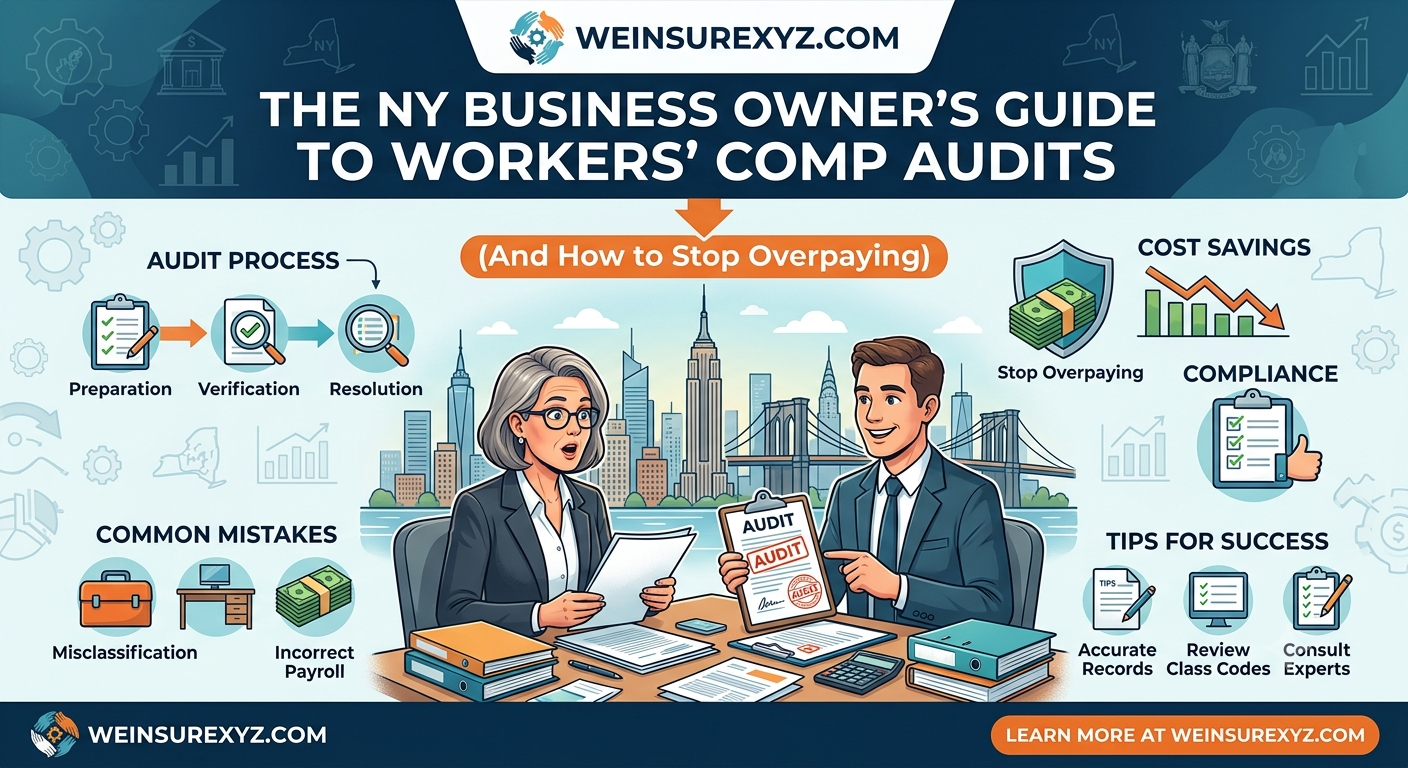
Most states mandate that any business with employees carry Workers’ Compensation Insurance. This type of coverage protects you and your employees from the potentially high costs of on-the-job illness and injury. Workers’ Comp Insurance can pay for medical bills, wages employees miss while they recover, and even support to an employee’s family, if an injury leads to death. A subsection of Workers’ Comp called Employer’s Liability Insurance funds the costs of lawsuits that employees bring alleging that an employer’s negligence led to the injury or illness.