







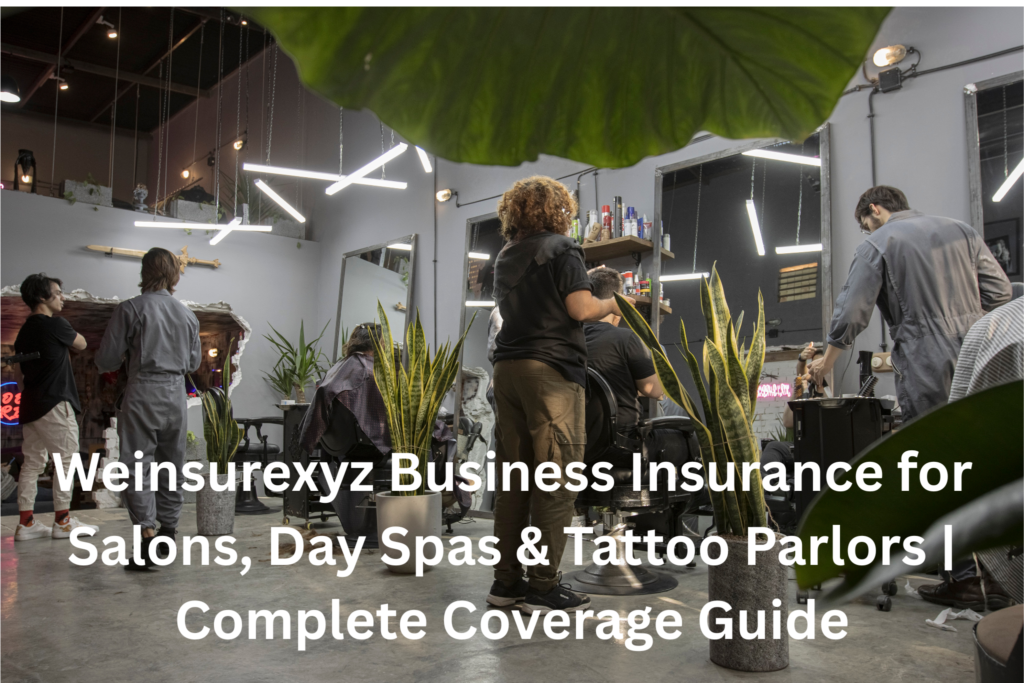
Explore essential business insurance for salons, day spas, and tattoo parlors to secure your business and clients effectively. Learn about general liability, professional liability, property, and workers’ comp coverage — and get a free quote today.
Business Insurance for Salons, Day Spas & Tattoo Parlors — What You Need to Know
Running a salon, day spa, or tattoo parlor is deeply rewarding — but it comes with real risks that can threaten everything you’ve built. A single client injury, equipment fire, or professional liability claim can cost your business tens of thousands of dollars.
The right business insurance for salons, day spas, and tattoo parlors protects you from those risks, keeps you legally compliant, and gives you the confidence to focus on your clients.
This guide breaks down exactly what coverage you need, why it matters, and how to get the best rates.
Why Salon, Day Spa & Tattoo Parlor Owners Need Business Insurance
Beauty and personal care businesses operate in a hands-on environment where accidents are an everyday possibility. Clients are physically in your space, receiving treatments that touch their bodies — and anything can go wrong, even with experienced staff and clean facilities.
Common risks for salon and spa businesses include:
- Client injuries on your premises — a client slips on a wet floor or has an allergic reaction to a product
- Professional service errors — a chemical treatment causes hair damage, or a tattoo results in infection
- Equipment and property damage — a fire, burst pipe, or vandalism damages your chairs, tools, and inventory
- Employee workplace injuries — a stylist cuts themselves or develops a repetitive strain injury
- Cyberattacks and data breaches — client payment and personal data is targeted by hackers
- Regulatory and health violations — particularly relevant for tattoo parlors, which face strict state and local health standards
Tattoo parlors face some of the highest risk exposure in the personal care industry. As one parlor owner noted, clients frequently arrive having suffered harm — including health hazards and injuries — from other shops. Even the most careful operators face unavoidable risks inherent to the work, making up-to-date insurance coverage essential.
Essential Business Insurance Coverage for Salons, Spas & Tattoo Parlors
1. General Liability Insurance
The foundation of any salon or spa insurance policy.
General liability insurance covers third-party claims involving bodily injury, property damage, and advertising injury. If a client slips and falls in your waiting area, spills a product on their clothing, or claims your advertising caused them harm, this policy pays for legal defense and settlements.
For most salons and spas, general liability is the minimum coverage you should carry — and many commercial landlords require it before you sign a lease.
Typical coverage: $1 million per occurrence / $2 million aggregate
2. Professional Liability Insurance (Errors & Omissions)
Critical for service-based beauty businesses.
Professional liability insurance — also called errors and omissions (E&O) insurance — protects you when a client claims your services caused them harm through negligence or a mistake in your work.
This is especially important for:
- Tattoo and permanent makeup artists (infection, allergic reaction, unsatisfactory results)
- Estheticians performing chemical peels or laser treatments
- Massage therapists (injury during treatment)
- Hair colorists (scalp burns, hair damage)
General liability alone does not cover professional service claims. You need both.
3. Commercial Property Insurance
Protects your physical business assets.
Your salon or spa is full of valuable equipment — styling chairs, massage tables, tanning beds, autoclaves, color inventory, and retail products. Commercial property insurance covers damage or loss caused by fire, theft, vandalism, water damage, and certain natural disasters.
If you lease your space, your landlord’s policy covers the building — but not your equipment or improvements. If you own your building, property insurance is even more critical.
4. Workers’ Compensation Insurance
Required by law in most states if you have employees.
Workers’ compensation covers medical bills and lost wages if an employee is injured on the job — a stylist burned by chemicals, a tattoo artist developing a wrist injury, or a massage therapist hurting their back.
In New York and most other states, carrying workers’ comp is legally mandatory the moment you hire your first employee. Non-compliance can result in heavy fines and business suspension.
5. Business Owners Policy (BOP)
A cost-effective bundle for small salons and spas.
A Business Owners Policy combines general liability and commercial property insurance into a single, discounted package. For most small salons, spas, and tattoo parlors, a BOP is the most affordable way to get broad coverage without purchasing each policy separately.
6. Cyber Liability Insurance
Increasingly essential as beauty businesses go digital.
If you store client credit card information, appointment data, or personal details in a software system, you are a potential target for cybercriminals. Cyber liability insurance covers the cost of data breach notification, credit monitoring services, legal defense, regulatory fines, and recovery expenses.
Even small salons using booking apps or POS systems should consider this coverage.
7. Umbrella / Excess Liability Insurance
Extra protection when standard limits aren’t enough.
Umbrella liability insurance provides additional coverage above the limits of your general liability and other underlying policies. If a major lawsuit exceeds your general liability limit, umbrella coverage picks up the difference — protecting your personal and business assets from catastrophic loss.
What Factors Affect the Cost of Salon & Spa Insurance?
Your insurance premiums are influenced by several factors:
| Factor | Impact on Premium |
|---|---|
| Type of services offered | Tattoo & piercing = higher risk than haircuts |
| Number of employees | More staff = higher workers’ comp costs |
| Business location | High-crime or disaster-prone areas cost more |
| Annual revenue | Higher revenue typically means higher exposure |
| Claims history | Prior claims raise your rates |
| Coverage limits selected | Higher limits = higher premium |
Most small salons and spas can expect to pay $500–$1,500 per year for general liability coverage, depending on the above factors. Tattoo parlors typically fall at the higher end due to the inherent risks associated with piercing and inking services.
Legal & Regulatory Considerations for Tattoo Parlors
Tattoo parlors are subject to particularly strict state and local health regulations. Many jurisdictions require specific permits, sanitation protocols, sterilization equipment (such as autoclaves), and documented staff training.
Failing to comply with these standards can expose you to regulatory fines — and in the event of a client complaint or lawsuit, non-compliance can significantly weaken your legal defense.
Your insurance broker can help you understand which coverages align with your regulatory obligations and ensure your policy doesn’t contain exclusions that could leave you exposed.
Frequently Asked Questions
Do I need professional liability insurance if I already have general liability? Yes. General liability covers accidents like slip-and-falls, while professional liability covers claims arising from your services — such as a client claiming a treatment damaged their skin or hair. They cover different risks and you need both.
Is tattoo parlor insurance more expensive than salon insurance? Generally yes. Tattoo and piercing services carry a higher perceived risk — including the potential for infection, bloodborne pathogen exposure, and permanent physical changes — which typically results in higher premiums.
Can I get insurance if I rent a booth or work as a freelance stylist? Absolutely. Independent beauty professionals who rent booth space or work freelance should carry their own general liability and professional liability policies. The salon owner’s policy does not cover you.
What is the fastest way to get insured? Working with an independent insurance broker who specializes in the personal care industry is the fastest route. A broker can compare quotes from multiple carriers and often get you a certificate of insurance the same or next business day.
Get a Free Business Insurance Quote for Your Salon, Spa, or Tattoo Parlor
Don’t leave your business exposed. Whether you run a single-chair barbershop, a full-service day spa, or a multi-artist tattoo studio, the right insurance policy protects your livelihood, your clients, and your reputation.
Request a Free Quote → or call us at (888) 540-7374 | Mon–Fri, 9 AM–5:30 PM ET