










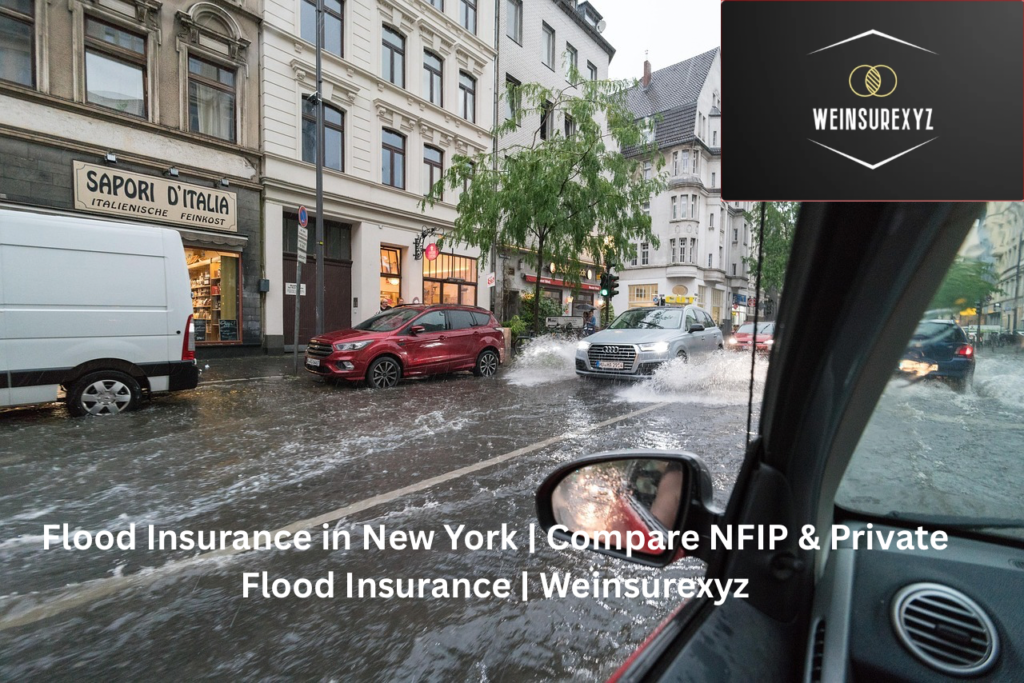
Learn everything about flood insurance in New York, including costs, flood zones, NFIP vs. private flood insurance, coverage options, and how to protect your home or business with Weinsurexyz.
Flood Insurance in New York: Did You Have Flood Insurance When the Storm Hit?
When torrential rain swept across parts of New York, streets became rivers, vehicles were stranded, basements filled with water, and homes and businesses suffered costly damage. Many property owners asked the same heartbreaking question after the water receded:
“Did I have flood insurance?”
Unfortunately, thousands discovered too late that their standard homeowners insurance policy generally does not cover flood damage. Whether flooding is caused by heavy rainfall,  overflowing rivers, storm surge, rapid snowmelt, or blocked drainage systems, damage from rising surface water is typically excluded from standard homeowners and commercial property insurance policies.
Flooding isn’t just a coastal problem.
In New York, flooding can occur almost anywhere—from New York City and Long Island to Buffalo, Rochester, Syracuse, Albany, Westchester County, the Hudson Valley, and communities near lakes, rivers, and streams. Even neighborhoods outside FEMA-designated high-risk flood zones experience flood losses every year.
The good news is that flood insurance can provide financial protection before disaster strikes.
This guide explains everything New York homeowners, condo owners, renters, landlords, and business owners need to know about flood insurance, including how coverage works, what it costs, and whether a private flood insurance policy may be a better option than the National Flood Insurance Program (NFIP).
⸻
Why Flood Insurance Matters in New York
New York experiences flooding from many different causes, including:
* Hurricanes and tropical storms
* Nor’easters
* Flash flooding
* Heavy rainfall
* Snowmelt
* Overflowing rivers and creeks
* Storm surge along coastal communities
* Urban drainage failures
Many people believe they don’t need flood insurance because they don’t live near the ocean.
That assumption can be expensive.
According to FEMA, more than 20% of flood insurance claims come from properties located outside high-risk flood zones.
A single inch of floodwater can cause thousands of dollars in property damage.
⸻
Does Homeowners Insurance Cover Flood Damage?
One of the biggest misconceptions is that homeowners insurance covers flooding.
In most cases, it does not.
A standard homeowners insurance policy generally covers:
* Fire
* Wind
* Hail
* Theft
* Vandalism
* Certain types of water damage from plumbing failures
However, it generally excludes damage caused by:
* Rising water
* Flash floods
* Overflowing rivers
* Storm surge
* Mudflow (as defined under flood insurance)
If water enters your home because floodwaters rise from outside, the damage is generally not covered unless you have flood insurance.
⸻
What Is Flood Insurance?
Flood insurance is a separate insurance policy designed specifically to protect your property against losses caused by flooding.
Flood insurance is available through:
* The National Flood Insurance Program (NFIP)
* Private flood insurance companies
Depending on the policy, flood insurance may help pay for:
* Structural repairs
* Foundation damage
* Electrical systems
* Plumbing systems
* HVAC equipment
* Water heaters
* Flooring
* Cabinets
* Built-in appliances
* Personal belongings
* Cleanup expenses
* Debris removal (subject to policy terms)
Private flood insurance policies may also offer additional benefits that are not available under standard NFIP policies, depending on the insurer.
⸻
What Is Considered a Flood?
Under most flood insurance policies, a flood is generally defined as a temporary condition where normally dry land is inundated by water affecting at least two properties or two acres of land.
Examples include:
* Heavy rain overwhelming drainage systems
* River overflow
* Coastal storm surge
* Rapid snowmelt
* Flash flooding
* Mudflow meeting the policy definition
⸻
Who Needs Flood Insurance in New York?
Flood insurance may be appropriate for:
Homeowners
Protect your home’s structure and, depending on the policy, your belongings.
Condo Owners
Condo associations may insure the building, but individual unit owners often need separate coverage for personal property and improvements.
Renters
Your landlord’s insurance generally does not cover your belongings.
Flood insurance for renters can help protect:
* Furniture
* Electronics
* Clothing
* Appliances
* Personal possessions
Landlords
Rental properties can sustain expensive flood damage that may interrupt rental income and require extensive repairs.
Business Owners
Commercial flooding can damage:
* Buildings
* Inventory
* Equipment
* Furniture
* Machinery
Business interruption resulting solely from flooding is not automatically covered by every policy, making it important to review available coverage options carefully.
⸻
Why More New Yorkers Are Considering Private Flood Insurance
For decades, the NFIP was the primary option.
Today, many homeowners and businesses are comparing private flood insurance because it may offer:
* Higher building limits
* Higher contents limits
* Replacement cost options
* Additional living expense coverage (available with many private policies)
* Shorter waiting periods with some insurers
* Competitive pricing for certain properties
The best choice depends on your property’s location, flood risk, lender requirements, and the specific policy terms available.
⸻
Common Flood Damage After Heavy Rain
Flood losses often include:
* Destroyed flooring
* Mold growth
* Electrical damage
* Foundation issues
* Damaged drywall
* Ruined insulation
* Contaminated water
* HVAC damage
* Furniture loss
* Appliance replacement
* Vehicle damage (covered under comprehensive auto coverage rather than flood insurance for the home)
Many of these repairs can cost tens of thousands of dollars.
⸻
How Much Flood Damage Can Cost
Even a relatively small flood can become financially devastating.
Potential repair expenses include:
Damage Estimated Cost
Flooring replacement Thousands of dollars
Drywall replacement Thousands of dollars
Mold remediation Thousands to tens of thousands of dollars
Electrical repairs Thousands of dollars
Kitchen restoration Tens of thousands of dollars
Finished basement restoration Tens of thousands of dollars
The total cost depends on the depth of flooding, the size of the property, local labor costs, and the materials affected.
⸻
Is Flood Insurance Required?
Flood insurance is generally required by lenders if:
* Your property is located in a Special Flood Hazard Area (SFHA), and
* Your mortgage is backed by a federally regulated or insured lender.
Even if flood insurance is not required, many property owners choose to purchase it because flooding can occur outside high-risk flood zones.
NFIP vs. Private Flood Insurance in New York
One of the first decisions New York property owners face is whether to purchase flood insurance through the National Flood Insurance Program (NFIP) or through a private flood insurance company.
Both options can provide valuable financial protection, but they differ in coverage, limits, pricing, and eligibility.
What Is the National Flood Insurance Program (NFIP)?
The NFIP is administered by the Federal Emergency Management Agency (FEMA) and provides flood insurance in participating communities across the United States. Policies are often sold and serviced by private insurance companies participating in FEMA’s Write Your Own (WYO) program.
Many homeowners first encounter the NFIP when a mortgage lender requires flood insurance because the property is located in a Special Flood Hazard Area.
Advantages of the NFIP
The NFIP offers several important benefits:
- Available in participating communities, even for many higher-risk properties.
- Standardized policy language nationwide.
- Accepted by federally regulated mortgage lenders when flood insurance is required.
- Backed by the federal government.
NFIP Coverage Limits
For a typical residential property, the NFIP currently provides:
- Building coverage: Up to $250,000
- Personal property (contents) coverage: Up to $100,000
Coverage limits and eligibility vary for commercial properties and other building types.
What Is Private Flood Insurance?
Private flood insurance is offered by insurance companies outside the NFIP. Depending on the insurer and the property, these policies may provide broader coverage options or higher limits than the NFIP.
Every private policy is different, so it’s important to review the policy carefully with your insurance professional.
Potential advantages may include:
- Higher building coverage limits.
- Higher personal property limits.
- Replacement cost coverage for personal property on some policies.
- Additional Living Expense (ALE) coverage on many policies.
- Flexible deductible options.
- Coverage for higher-value homes that exceed NFIP limits.
Not every insurer offers every feature, so policy terms should always be reviewed before purchase.
NFIP vs. Private Flood Insurance at a Glance
| Feature | NFIP | Private Flood Insurance* |
| Building coverage | Up to $250,000 | May offer substantially higher limits |
| Contents coverage | Up to $100,000 | Often higher limits available |
| Additional Living Expenses | Not included | Available with many policies |
| Replacement Cost Options | Limited | Often broader options available |
| Premiums | Based on FEMA rating methodology | Based on insurer underwriting |
| Underwriting | Standardized | Varies by company |
*Coverage varies by insurer and policy.
Understanding FEMA Flood Zones
Flood zones are used to estimate a property’s flood risk and can affect insurance requirements and premiums.
Some of the most common flood zones include:
Zone AE
Areas with a 1% annual chance of flooding (often referred to as the “100-year floodplain”) where base flood elevations have been determined.
Zone VE
Coastal areas with a high risk of flooding and additional hazards from wave action.
Zone X
Areas considered to have a lower flood risk. Flood insurance is generally not required by lenders in these areas, although flooding can still occur.
Zone A
High-risk areas where detailed flood elevation studies may not have been completed.
Do You Need Flood Insurance if You’re in Zone X?
Many people believe they are safe because they are in a low- or moderate-risk flood zone.
However, flooding is not limited to FEMA’s highest-risk areas. Heavy rainfall, overwhelmed storm drains, blocked culverts, and localized flash flooding can cause damage well outside mapped floodplains.
For some property owners, flood insurance can provide valuable financial protection even when it is not required by a lender.
How Much Does Flood Insurance Cost in New York?
Flood insurance premiums vary significantly based on factors such as:
- Property location.
- Flood zone.
- Elevation.
- Construction type.
- Foundation design.
- Replacement cost.
- Coverage limits.
- Deductible selected.
- Whether the policy is through the NFIP or a private insurer.
Because every property is different, there is no single “average” premium that applies to all homes in New York.
The best way to determine your cost is to obtain quotes based on your property’s specific characteristics.
Which Option Is Right for You?
For some homeowners, the NFIP provides the protection they need.
For others—particularly owners of higher-value homes or those seeking broader coverage options—a private flood insurance policy may offer advantages worth considering.
An experienced insurance advisor can compare available options and explain the differences in coverage, exclusions, deductibles, and pricing so you can make an informed decision.
Flood Insurance for Homeowners, Renters, Condo Owners & Businesses in New York
Choosing the right flood insurance isn’t just about your location—it’s also about the type of property you own or occupy. Whether you’re a homeowner, renter, landlord, condo owner, or business owner, understanding your coverage options can help you recover more quickly after a flood.
Flood Insurance for Homeowners
For most homeowners, the home is their largest financial investment. A flood can damage structural components, electrical systems, plumbing, flooring, appliances, and personal belongings.
Depending on the policy selected, flood insurance can help pay to repair or rebuild covered portions of your home after a covered flood event.
If you recently purchased a home or refinanced your mortgage, it’s a good time to review whether your current insurance includes flood coverage or whether a separate flood policy is appropriate.
Flood Insurance for Condo Owners
Condominium associations often carry insurance for the building’s common areas and structure, but that coverage may not fully protect the inside of your unit or your personal belongings.
Depending on your association’s master policy and your individual insurance policy, you may need separate flood coverage for:
- Interior improvements
- Flooring
- Cabinets
- Appliances
- Personal belongings
- Electronics
- Clothing
- Furniture
Review both your condo association’s master policy and your individual policy to understand where your responsibilities begin.
Flood Insurance for Renters
Many renters assume their landlord’s insurance will protect their belongings after a flood.
In most cases, it does not.
A landlord’s policy generally protects the building—not the tenant’s personal property.
Flood insurance for renters can help protect:
- Furniture
- Televisions
- Computers
- Clothing
- Kitchen items
- Electronics
- Personal possessions
If replacing everything in your apartment would create a financial hardship, renter’s flood insurance may be worth considering.
Flood Insurance for Landlords
Rental properties face many of the same flood risks as owner-occupied homes.
Flood damage may require extensive repairs before tenants can safely return, potentially resulting in lost rental income and unexpected expenses.
Whether you own a single-family rental, a duplex, or multiple investment properties, reviewing your flood risk is an important part of protecting your investment.
Flood Insurance for Businesses
Commercial flooding can interrupt operations for weeks or even months.
A flood can damage:
- Buildings
- Office furniture
- Inventory
- Manufacturing equipment
- Machinery
- Computers
- Electronics
- Fixtures
Business owners should also discuss whether additional coverages—such as business interruption or extra expense coverage—are available and appropriate, since flood-related income losses are not automatically covered under every policy.
If you own a retail store, restaurant, warehouse, office, medical practice, or other commercial property in New York, understanding your flood exposure is an important part of your risk management plan.
What Is Typically Not Covered by Flood Insurance?
Although flood insurance provides valuable protection, it does not cover every type of loss.
Coverage varies by policy, but exclusions may include:
- Damage from moisture, mildew, or mold that could have been avoided by the property owner.
- Currency, precious metals, and certain valuable papers.
- Landscaping, trees, plants, decks, patios, fences, and swimming pools.
- Financial losses resulting from business interruption unless specifically covered by the policy purchased.
- Temporary housing expenses under standard NFIP residential policies.
Always review your policy carefully so you understand what is and is not covered.
How to File a Flood Insurance Claim
If your property is damaged by flooding, taking prompt action can make the claims process smoother.
Here are some general steps:
- Contact your insurance company or agent as soon as possible.
- Document the damage with photographs and videos before cleanup, if it is safe to do so.
- Make temporary repairs to help prevent additional damage when possible.
- Keep receipts for emergency expenses and temporary repairs.
- Prepare a list of damaged personal property.
- Cooperate with the insurance adjuster during the inspection.
Your insurer will explain the documentation needed and the next steps based on your policy.
Tips to Reduce Your Flood Risk
While insurance is an important financial safeguard, there are also practical steps you can take to reduce potential flood damage:
- Keep gutters and downspouts clear.
- Ensure sump pumps are maintained and tested.
- Install backflow prevention devices where appropriate.
- Elevate utilities and valuable equipment in flood-prone areas.
- Store important documents in waterproof containers.
- Know your property’s flood risk before severe weather arrives.
No mitigation measure can eliminate flood risk entirely, but preparation may reduce the severity of future losses.
Frequently Asked Questions
Does homeowners insurance cover flooding?
Generally, no. Standard homeowners insurance policies typically exclude damage caused by flooding from rising surface water. A separate flood insurance policy is generally required.
Is flood insurance required in New York?
It depends. If your property is located in a Special Flood Hazard Area and you have a mortgage from a federally regulated or insured lender, flood insurance is generally required. Even when it is not required, many owners choose to purchase it voluntarily.
Can I buy flood insurance if I am not in a high-risk flood zone?
Yes. Many properties outside high-risk flood zones are eligible for flood insurance, and flood damage can occur outside mapped floodplains.
How long does it take for flood insurance to become effective?
Waiting periods vary depending on the type of policy and the circumstances of the purchase. Some policies have waiting periods before coverage begins, while certain lender-related transactions or private policies may have different rules. Confirm the effective date with your insurer.
Is flood insurance worth it?
That depends on your property’s flood risk, financial situation, lender requirements, and your ability to absorb the cost of repairing flood damage without insurance. Discussing your options with a licensed insurance professional can help you decide.
Protect Your Home or Business Before the Next Storm
Flooding can happen with little warning, and the financial impact can be significant. Whether you own a home in Long Island, a condominium in New York City, a rental property in Buffalo, or a business in Albany, understanding your flood risk is an important part of protecting your investment.
At Weinsurexyz.com, we help homeowners and businesses explore flood insurance options from trusted insurance providers. Our team can explain the differences between available policies, answer your questions, and help you compare coverage options based on your property’s needs.
Don’t wait until the next heavy rain to find out you aren’t covered. Contact Weinsurexyz today to request a personalized flood insurance quote and take the next step toward protecting what matters most.