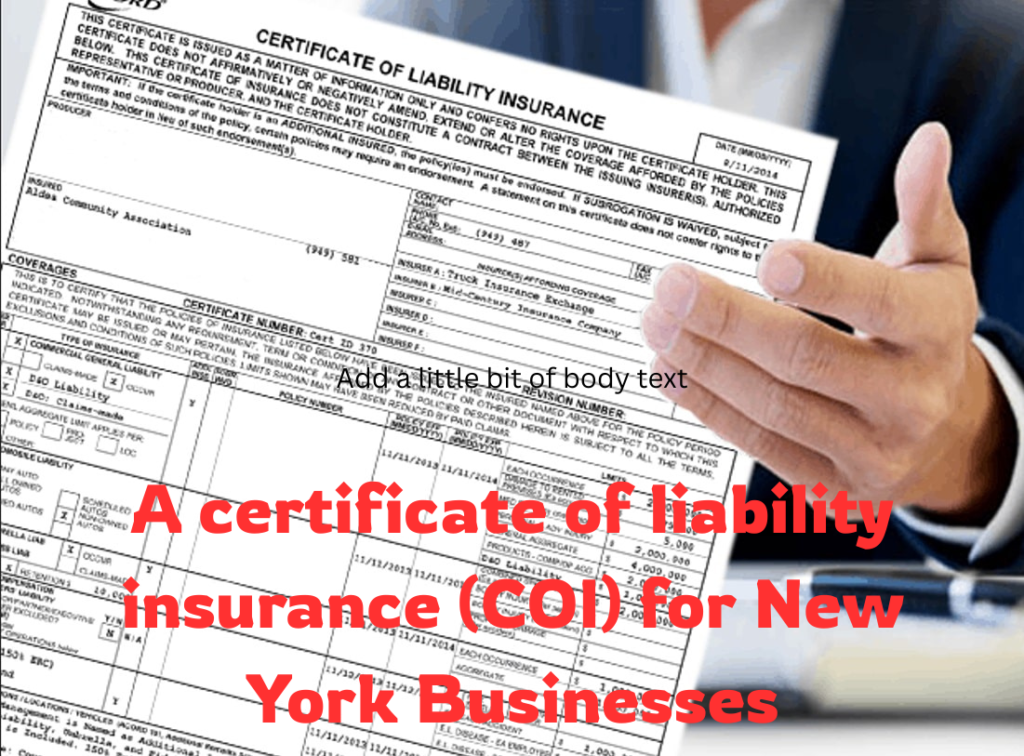
What is a certificate of liability insurance used for? A certificate of liability insurance (COI), also known as a certificate of insurance or proof of insurance, is a document that provides proof of insurance coverage for your business and summarizes key information about a business’s liability insurance coverage. It serves as official proof that the business has a valid, active insurance policy in place to protect against claims for bodily injury, property damage, or negligence.
- Verifying Insurance Coverage: A certificate of liability insurance is often requested by clients, landlords, or business partners to ensure that the business they are working with is adequately insured.
- Meeting Contractual Obligations: Many contracts and agreements include clauses requiring businesses to maintain specified types and limits of insurance. A certificate of liability insurance helps demonstrate compliance with these requirements.
- Risk Mitigation: By requesting and verifying COIs from contractors and vendors, businesses can reduce their own liability exposure by ensuring that the third party’s insurance will cover potential losses stemming from their work.
- Applying for Professional Licenses: Some professions, like real estate agents and contractors, are legally required to carry general liability insurance, and a certificate of liability insurance can serve as proof when applying for the necessary licenses.
- Securing Commercial Leases: Landlords often require tenants to provide a COI, demonstrating that the business has liability coverage in case of accidents or damages on the leased property.
What information is included in a certificate of liability insurance?
- Insured’s Name and Address
- Name and Contact Information of the Insurance Company
- Policy Number
- Policy Effective and Expiration Dates
- Types of Coverage (e.g., General Liability, Professional Liability, Workers’ Compensation)
- Policy Limits
- Deductibles (if applicable)
- Description of Operations (if relevant to specific projects or locations)
- Certificate Holder’s Name and Address (the party requesting the COI)
- Indication of whether the Certificate Holder is an “Additional Insured” on the policy
- Any endorsements, such as waivers of subrogation or primary and noncontributory clauses.
How to get a certificate of liability insurance
- Purchase a Liability Insurance Policy: You must have an active liability insurance policy to get a COI. Compare quotes from top-rated insurance companies. Complete online quote or call us.
- Request from Your Insurer or Agent: Your insurance company or agent will issue you a COI once you have a policy. You can often download a copy online through their customer portal or request one directly from your agent.
- Provide Necessary Information: To get a certificate of liability insurance for a specific client or job, you may need to provide their name, address, and potentially their tax ID number.
Important considerations for certificate of liability insurance
- COIs are typically one page long and often based on the standardized ACORD 25 form used in the insurance industry.
- It’s crucial to verify the accuracy of the information on any certificate of liability insurance you receive, including the dates, coverage limits, and insured parties.
- Adding a client or partner as an “additional insured” on your policy is a common practice, particularly for services where a mutual risk exists. This extends coverage to the additional insured if they are sued as a result of your work.
- There is no cost for a certificate of liability insurance itself, as it’s simply proof of an existing policy. However, the cost of the underlying insurance policy will depend on various factors.