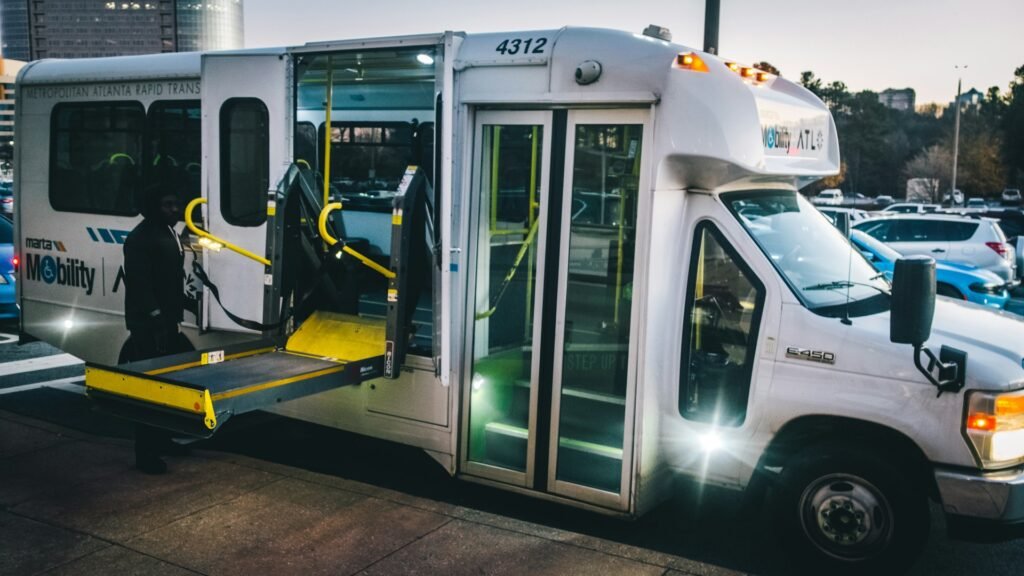
Every day, thousands of wheelchair vans, ambulettes, and sedans move Medicaid enrollees and private-pay patients across Queens, Brooklyn, the Bronx, Manhattan, Staten Island, and beyond to dialysis, chemotherapy, and specialist appointments they couldn’t otherwise reach. It’s essential work — and it’s some of the hardest commercial transportation risk to insure correctly. Weinsurexyz built a specialized non-emergency medical transportation insurance program specifically for New York NEMT operators, so a policy written for a pizza delivery fleet or a standard livery car service doesn’t end up standing between your business and a claim it was never designed to cover.
Non-Emergency Medical Transportation Insurance is essential for operators ensuring patient safety and compliance with regulations.
What Is NEMT Insurance, and Why Isn’t Standard Commercial Auto Enough?
Non-emergency medical transportation insurance is a package of coverages built for businesses that transport patients — people who are frequently elderly, mobility-impaired, cognitively impaired, or medically fragile — to and from non-emergency healthcare appointments. NEMT vehicles carry no lightbars or sirens; they’re not ambulances. But the passengers they carry are far more vulnerable than the average rideshare or livery fare, and that changes the entire risk profile of the vehicle.
The importance of Non-Emergency Medical Transportation Insurance cannot be overstated, as it protects both the operators and the vulnerable passengers they transport.
Most standard commercial auto and general livery policies are underwritten with taxi, black car, and courier risk in mind — not the physical transfer of a passenger from a wheelchair into a vehicle, the securement of that wheelchair during transport, or the liability exposure created when a driver is alone with a cognitively impaired patient. Because of that mismatch, many mainstream carriers simply exclude or decline “non-emergency medical vehicles” and “social service agencies” outright, which is why NEMT coverage is typically placed through carriers and MGAs that specialize in the class.
Proper Non-Emergency Medical Transportation Insurance ensures that all unique risks associated with transporting patients are adequately covered.
Core Coverages in a NEMT Insurance Program
A properly structured NEMT policy is really several layers of protection working together. Weinsurexyz builds programs around these core lines:
Commercial Auto Liability
Covers bodily injury and property damage arising from an accident involving your wheelchair vans, ambulettes, minivans, or sedans. New York requires minimum limits for hired vehicles, but Medicaid transportation brokers and managed care contracts almost always require limits well above the state minimum — commonly $1,000,000 combined single limit or higher per vehicle. See our full Commercial Auto Insurance coverage page for the broader policy details behind this line.
General Liability
Covers bodily injury or property damage that happens outside the vehicle — a slip and fall at pickup, an injury while assisting a passenger to the door, or an incident at your dispatch office or garage.
General liability coverage is crucial, as it complements your Non-Emergency Medical Transportation Insurance by covering incidents outside the vehicle.
Professional / Medical Transportation Liability (Including Abuse & Molestation Coverage)
This is the coverage that separates a real NEMT program from a repurposed livery policy. It responds to claims tied to patient handling — an improper wheelchair transfer, a securement failure, a missed or late pickup that causes a patient to miss a dialysis or chemotherapy appointment, a failure to accommodate a wheelchair, or wrongful transport. Because NEMT drivers are frequently alone with vulnerable passengers, most Medicaid brokers and managed care contracts specifically require a dedicated abuse and molestation endorsement — a coverage line rarely included in a standard livery or courier policy.
This type of liability is essential in your Non-Emergency Medical Transportation Insurance program, addressing unique patient handling situations.
Passenger Accident / Medical Payments Coverage
Pays medical expenses for passengers injured in a covered vehicle, regardless of fault — often a contractual requirement from Medicaid transportation brokers and hospital systems.
Having passenger accident coverage is a vital component of your Non-Emergency Medical Transportation Insurance to safeguard against unforeseen incidents.
Non-Owned and Hired Auto Liability
Important for operators who lease vehicles, subcontract runs to owner-operators, or supplement their fleet during peak demand.
Workers’ Compensation
Required in New York for almost any business with employees, including NEMT drivers and dispatchers. Drivers assisting with wheelchair transfers and lift operation face real on-the-job injury risk — this coverage protects both them and the business. Learn more on our Workers’ Compensation Insurance page.
Workers’ compensation also plays a key role in your Non-Emergency Medical Transportation Insurance, protecting employees who face on-the-job risks.
Commercial Umbrella / Excess Liability
Adds a layer of protection above your auto and general liability limits. Given how quickly a single serious passenger-injury claim can exceed primary limits, most NEMT operators carrying broker or hospital contracts choose an umbrella in the $1,000,000–$5,000,000 range.
Commercial Umbrella coverage enhances your Non-Emergency Medical Transportation Insurance by providing additional limits to safeguard your business.
Cyber and Data Liability
NEMT providers handle protected health information — trip logs, diagnoses tied to appointment types, insurance IDs. A data breach involving this information can trigger HIPAA-adjacent notification obligations and liability, which is why cyber coverage is increasingly built into NEMT programs.
Cyber liability is increasingly important in your Non-Emergency Medical Transportation Insurance program, addressing the risks of data breaches.
 New York-Specific Requirements for NEMT Operators
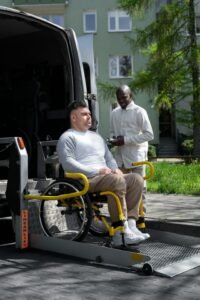
New York State delivers Medicaid NEMT through Medical Answering Services (MAS), the state’s sole Medicaid transportation broker, which coordinates roughly 15 million trips a year across all 62 counties. If you contract with MAS — or with a managed care organization’s transportation network — your insurance isn’t just a business decision; it’s a credentialing requirement. Requirements also differ meaningfully depending on whether you operate inside or outside the five boroughs.
Compliance with New York regulations is essential for your Non-Emergency Medical Transportation Insurance to ensure you meet all legal requirements.
Operating Within New York City: TLC Licensing
Any for-hire vehicle operating within the five boroughs — including wheelchair-accessible NEMT vans and ambulettes — must be licensed through the NYC Taxi and Limousine Commission (TLC), typically under a Paratransit Vehicle or Paratransit Base License, in addition to any Medicaid or MCO credentialing. A standard commercial auto policy that isn’t written to satisfy TLC filing requirements won’t qualify. Most NYC ambulettes end up dual-plated — carrying both TLC authorization and Medicaid transportation approval — since the two systems are administered separately. TLC has also moved to tighten its insurance standards: new rules require for-hire vehicle coverage to come from an admitted carrier and include $100,000 in no-fault coverage, effective March 1, 2026. Vehicles must also pass semi-annual NYS DOT inspections to stay in service.
Your Non-Emergency Medical Transportation Insurance must cover all TLC licensing requirements when operating within the city.
Operating Outside New York City
Upstate and suburban operators working with managed care transportation networks typically see contract-driven minimums rather than TLC rules: commonly $1,000,000 commercial auto liability (CSL), $1,000,000 general liability, dedicated abuse and molestation coverage, and workers’ compensation for any W-2 drivers. These figures are contract minimums set by the MCO or broker you’re credentialed with, not a statewide statutory floor — always confirm exact limits against your specific broker or health plan agreement before binding.
Operators should ensure their Non-Emergency Medical Transportation Insurance meets MCO contract minimums for seamless operations.
Requirements That Apply Statewide
-
- Proof of coverage on file: MAS and MCO transportation networks routinely verify a provider’s insurance coverage alongside driver’s license status, vehicle registration, and Medicaid exclusion list checks. A lapse or gap can trigger a Corrective Action Plan or suspension from the network.
Documenting proof of coverage is critical for your Non-Emergency Medical Transportation Insurance to avoid disruptions in service.
-
- Additional insured and waiver of subrogation endorsements: Medicaid brokers and MCOs commonly require your policy to name them as an additional insured and waive the carrier’s right of subrogation against them — a certificate that’s missing these endorsements is often rejected even if the underlying limits are adequate.
- Vehicle-specific underwriting: Ambulettes, wheelchair-accessible vans, and stretcher vans are underwritten differently than standard sedans used for ambulatory patients — insurers look closely at vehicle age (MAS approval generally caps vehicle age around 10 years), seating and lift configuration, and maintenance records.
Comprehensive underwriting of your vehicles is vital for your Non-Emergency Medical Transportation Insurance to reflect their specific needs.
- Driver qualifications feed underwriting: Motor vehicle records, CTAA Passenger Assistance, Safety and Sensitivity (PASS) certification, and background checks all factor into how a carrier prices and, in some cases, whether they’ll write your fleet at all. Many credentialing programs also require drivers to be W-2 employees rather than 1099 contractors.
Because MAS and MCO credentialing checks are ongoing rather than one-time, an insurance program that lapses, gets non-renewed, or falls short of a contract’s stated limits — or that’s missing a required endorsement — can jeopardize your entire trip assignment volume, not just your coverage.
Your Non-Emergency Medical Transportation Insurance must remain active to ensure continuous service and compliance with regulations.
Who Needs This Coverage
Weinsurexyz places NEMT programs for:
Operators of various NEMT programs must prioritize their Non-Emergency Medical Transportation Insurance to protect their business interests.
-
- Ambulette and wheelchair-van operators contracted with MAS or a managed care transportation network
- Stretcher van and gurney transport providers
Ambulatory services need to focus on their Non-Emergency Medical Transportation Insurance to ensure proper coverage for medical appointments.
-
- Ambulatory sedan and livery services focused on medical appointments and dialysis routes
- Adult day care and social service agencies operating their own transportation fleets
Adult day care services rely heavily on robust Non-Emergency Medical Transportation Insurance to support their transportation needs.
-
- Owner-operators and small fleets subcontracting to larger NEMT networks
- Growing multi-vehicle fleets expanding across Queens, Brooklyn, the Bronx, Nassau, and Suffolk counties
Growing fleets must evaluate their Non-Emergency Medical Transportation Insurance as they expand their operations across regions.
What Drives the Cost of NEMT Insurance
Every NEMT program is priced individually, but the factors that move a quote up or down are consistent:
Understanding cost drivers for your Non-Emergency Medical Transportation Insurance is crucial for managing business expenses.
-
- Fleet composition — the mix of sedans, wheelchair vans, and stretcher vehicles, and their age and mileage
- Driver experience and MVR history across the fleet
Driver history plays a significant role in the assessment of your Non-Emergency Medical Transportation Insurance costs.
-
- Claims history, particularly any prior passenger-injury or transfer-related claims
- Contracted limits required by MAS, MCOs, or hospital systems you serve
Your contracted limits directly impact your Non-Emergency Medical Transportation Insurance and should align with client expectations.
-
- Trip volume and service area, since dense urban routes carry different exposure than suburban or rural runs
- Employee vs. independent contractor driver structure
Employee structure should be considered when evaluating your Non-Emergency Medical Transportation Insurance coverage.
Because NEMT is a specialty class with limited standard-market appetite, working with a broker who has direct relationships with the carriers and MGAs actively writing this business — rather than shopping it as generic livery or courier risk — typically produces both a better price and a policy that actually matches your contractual obligations.
As a general benchmark, industry-reported annual premiums for New York NEMT vehicles tend to run noticeably higher inside the five boroughs than upstate or in suburban counties, largely reflecting TLC licensing overhead, traffic density, and claims frequency in NYC versus other parts of the state. Actual premium for your fleet depends heavily on the factors above, so treat any published range as a starting point for budgeting rather than a quote.
Knowledge of NEMT insurance costs helps operators better prepare for their Non-Emergency Medical Transportation Insurance needs.
Common Claims Scenarios in NEMT
Understanding where claims actually originate helps explain why each coverage layer matters:
Claims scenarios illustrate the necessity of adequate Non-Emergency Medical Transportation Insurance in protecting against risks.
-
- A wheelchair securement fails during transport, causing passenger injury
- A driver assisting a passenger from a doorway to the vehicle causes a fall
Identifying risks in claims for your Non-Emergency Medical Transportation Insurance can enhance your coverage strategy.
-
- A missed or significantly delayed pickup causes a patient to miss a dialysis or oncology appointment
- A rear-end or intersection collision while transporting multiple passengers
Tracking claims helps reinforce the importance of having comprehensive Non-Emergency Medical Transportation Insurance.
-
- An allegation involving a driver left alone with a cognitively impaired passenger
- A data incident exposing trip records containing protected health information
Employing a broker familiar with Non-Emergency Medical Transportation Insurance maximizes your coverage efficiency.
Each of these lands in a different coverage — auto, general liability, professional/abuse liability, or cyber — which is exactly why a program built from separate off-the-shelf policies so often leaves a gap precisely where a real claim occurs.
Why Work With Weinsurexyz for Your NEMT Program
Weinsurexyz specializes in crafting Non-Emergency Medical Transportation Insurance solutions tailored to your needs.
Weinsurexyz is a division of Liability Advisors Inc. (NY License #1810943), based in Jamaica, Queens, and built specifically around the coverage needs of New York’s high-risk and specialty commercial classes — including medical transportation. Co-led by Olga Yakubov, whose background spans more than 20 years in underwriting and risk management, our team places coverage with carriers and MGAs that actively write NEMT risk, rather than trying to force it into a generic commercial auto or livery form.
We help NEMT operators:
With our Non-Emergency Medical Transportation Insurance programs, we ensure operators meet all necessary requirements.
-
- Structure a program that satisfies MAS and MCO credentialing requirements from day one
- Match coverage limits to what your broker and hospital contracts actually require
Matching limits to contracts is essential for effective Non-Emergency Medical Transportation Insurance coverage.
-
- Add professional/abuse liability and cyber coverage often missing from standard livery quotes
- Review and adjust coverage as your fleet, driver roster, or service area grows
Professional liability in Non-Emergency Medical Transportation Insurance is crucial to protect operators from potential claims.
- Bundle auto, general liability, workers’ comp, and umbrella into one coordinated program instead of disconnected policies
Frequently Asked Questions
For your NEMT vehicles, having proper Non-Emergency Medical Transportation Insurance is vital for compliance and protection.
Does regular commercial auto insurance cover NEMT vehicles in New York?
Usually not adequately. Standard commercial auto policies are priced for typical delivery, courier, or livery risk and often exclude or restrict coverage for vehicles used to transport patients with mobility or medical limitations. Many mainstream carriers list non-emergency medical vehicles as an ineligible class entirely, which is why this coverage is placed through carriers and MGAs with specific NEMT appetite.
Understanding your Non-Emergency Medical Transportation Insurance coverage is key to ensuring compliance with various requirements.
What insurance do I need to contract with MAS or a managed care transportation network in New York?
At minimum, commercial auto liability meeting New York’s financial responsibility requirements and general liability coverage. In practice, MAS and individual managed care organizations often require higher limits than the state minimum, along with proof of workers’ compensation if you have employees. Requirements can vary by broker and by the population you’re serving, so it’s worth confirming exact limits before binding.
Ensuring compliance with MAS requires comprehensive Non-Emergency Medical Transportation Insurance to secure contracts.
Is workers’ compensation required for NEMT drivers in New York?
Yes. New York requires workers’ compensation coverage for virtually any business with employees, and NEMT drivers — who regularly assist with wheelchair transfers and lift operation — carry real on-the-job injury exposure that makes this coverage especially important, not just legally required.
Maintaining adequate workers’ compensation as part of your Non-Emergency Medical Transportation Insurance is critical for legal compliance.
What vehicles are covered under a NEMT insurance policy?
A NEMT program typically covers ambulatory sedans, wheelchair-accessible vans, ambulettes, and stretcher/gurney vans. Vehicle type, age, seating configuration, and lift equipment all factor into underwriting and pricing.
Having a thorough understanding of your Non-Emergency Medical Transportation Insurance helps you navigate vehicle management.
How much does NEMT insurance cost in New York?
Cost varies significantly based on fleet size and vehicle mix, driver MVR history, claims history, contracted coverage limits, and service area. Because NEMT is placed largely through specialty markets rather than standard-market carriers, getting an accurate figure requires an actual submission rather than a generic estimate — our team can walk you through what drives your specific quote.
Preparing for your Non-Emergency Medical Transportation Insurance needs is essential for successful operations.
Can one policy cover both my auto liability and professional/patient-handling liability?
Some specialty NEMT programs package these together; others place them as separate towers of coverage that need to be coordinated so there’s no gap between where auto liability ends and professional or abuse liability begins. This is one of the areas where working with a broker experienced in the class matters most — the claims that hurt small operators tend to land in exactly those seams.
Coordinating your Non-Emergency Medical Transportation Insurance can prevent gaps in essential coverage.
Do I need a TLC license to operate a NEMT vehicle in New York City?
Yes. Any for-hire vehicle operating within the five boroughs, including wheelchair-accessible NEMT vans and ambulettes, must be licensed through the NYC Taxi and Limousine Commission in addition to any Medicaid or managed care credentialing. A standard commercial auto policy that isn’t structured to satisfy TLC’s filing and insurance requirements — including its admitted-carrier and no-fault coverage rules — will not qualify, and most NYC ambulettes end up dual-plated with both TLC and Medicaid authorization.
Ensuring compliance with TLC regulations is vital for your Non-Emergency Medical Transportation Insurance operations.
Get a Non-Emergency Medical Transportation Insurance Quote
If you operate wheelchair vans, ambulettes, stretcher vehicles, or ambulatory medical transport in Queens, Brooklyn, the Bronx, Manhattan, Staten Island, or the surrounding New York area, Weinsurexyz can build a NEMT insurance program around your actual fleet, driver roster, and broker or MCO contract requirements. Contact our team to start your submission.
Start your journey toward effective Non-Emergency Medical Transportation Insurance by contacting Weinsurexyz today.
