Understanding Beauty and Spa Insurance for New York
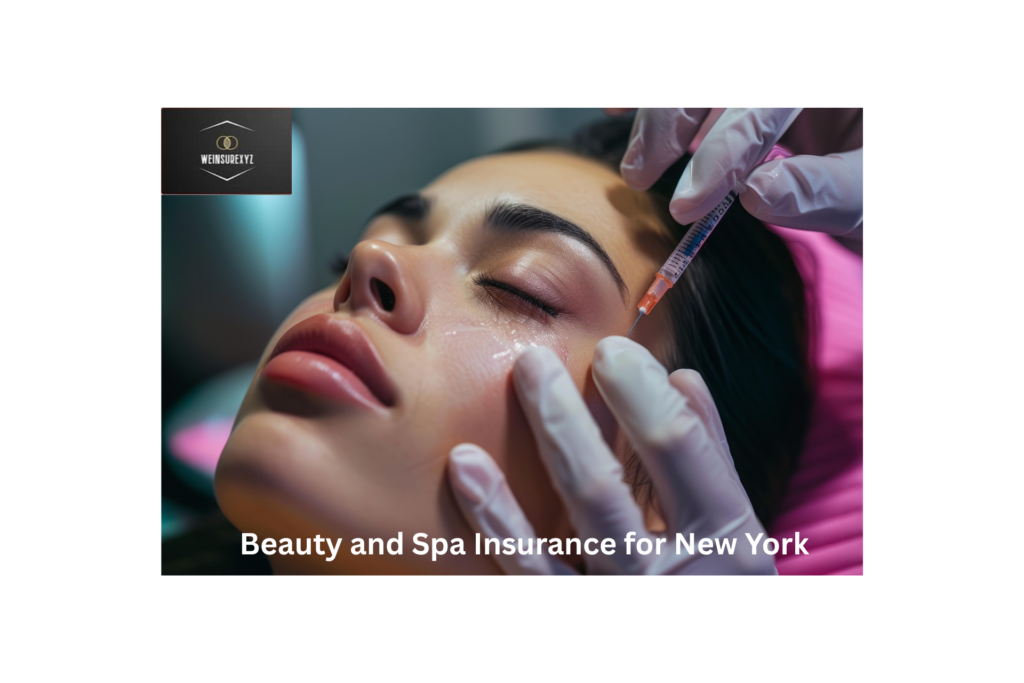
A Beauty and Spa Insurance sits in a genuinely awkward spot for insurance purposes — part medical practice, part retail beauty business, with real physician-supervision rules layered underneath both. That combination means a standard salon policy leaves gaps a medspa can’t afford, and generic business insurance doesn’t touch the malpractice-adjacent risk that comes with injectables, lasers, and physician oversight. This guide covers what medspa insurance actually needs to include in New York, and where the real gaps usually hide.From salon chairs to injectable suites, each section below is placed around the specific licensing rules that govern it in New York State.
Different Types of Beauty and Spa Insurance Coverages
Every listing below jumps to a section on this page covering who it’s for, where the exposure sits, and the New York licensing rules specific to that service.
- Spa & Salon Insurance — General & professional liability for day spas, hair salons, nail salons, and barbershops operating across New York State.
- MedSpa Insurance — Liability placement for medical spas offering injectables, laser, and physician-supervised aesthetic treatments in New York.
- Permanent Makeup & Microblading Insurance — Liability coverage for microblading, permanent cosmetics, and scalp micropigmentation technicians in New York.
- Beauty Professional Insurance — Professional and general liability for estheticians, cosmetologists, and independent beauty practitioners across New York.
- Dermal Filler Injection Liability Insurance — Liability coverage for qualified practitioners performing dermal filler and injectable treatments in New York.
- IV Therapy Insurance — Liability coverage for mobile and clinic-based IV hydration and wellness therapy providers in New York.
- Laser Hair Removal Insurance — Liability coverage for laser hair removal providers and equipment operators across New York State.
- School/Trainer Insurance — Liability coverage for cosmetology schools, aesthetics academies, and independent beauty trainers in New York.
- Skincare Private Labeling Insurance — Product liability coverage for private-label skincare brands formulated, packaged, or distributed out of New York.
- Microdermabrasion Liability Insurance — Professional and general liability for estheticians and spas offering microdermabrasion treatments in New York.
Understanding Spa & Salon Insurance
Coverage built around the realities of running a New York salon floor — chemical services, slip-and-fall exposure, and a revolving roster of booth renters and W-2 staff working under one roof.
Who This Covers
Day spas, hair salons, nail salons, barbershops, blow-dry bars, and multi-chair suites operating under a single New York business license — whether staffed entirely by employees, built around independent booth renters, or a mix of both.
Where the Exposure Sits
- Chemical burns or allergic reactions from color, relaxer, or peel services
- Slip-and-fall claims from wet floors, product spills, or styling-chair traffic
- Property damage to a client’s clothing, hair, or belongings
- Booth-renter and independent-contractor liability gaps — see below
The Booth-Renter Gap Most Salon Owners Miss
A salon’s master general liability policy frequently excludes booth renters and 1099 stylists specifically, since they aren’t employees of the business the policy is written to cover. That gap runs in both directions: if a booth renter’s client is injured during a service, the salon’s own policy may not respond — and the salon owner has no direct recourse if the renter causes damage without their own coverage in place.
This is exactly why most suite landlords and salon owners require independent operators to carry their own certificate of insurance before renting a chair, often naming the salon as an additional insured so the business itself is protected if a claim arises from the renter’s work.
Coverage Snapshot
What’s typically included
- ✓ General liability for bodily injury and property damage on premises
- ✓ Professional liability for services rendered by licensed staff
- ✓ Business personal property for chairs, stations, and retail stock
- ✓ Optional coverage for booth renters and 1099 stylists
Coverage, limits, and eligibility vary by carrier and are subject to underwriting. General summary, not a policy or a binding quote.
New York Regulatory Note
New York State Department of State, Division of Licensing Services, requires salons to hold an Appearance Enhancement Business license, with individual operators separately licensed as cosmetologists, estheticians, or nail specialists. This dual-licensing structure — the business licensed apart from each practitioner — is exactly why booth-renter coverage gaps are so common in New York specifically: the state’s own framework already treats the business and the individual operator as separate entities, and insurance needs to follow that same separation. Certificates of insurance are frequently requested by landlords and shopping-center leases before a salon can open its doors.
Offering More Than Standard Salon Services?
A growing number of New York salons layer additional services onto a standard menu — services that carry different risk and licensing requirements than a haircut or manicure. Physician-supervised aesthetic procedures fall under a different framework entirely (see MedSpa Insurance below). Permanent makeup and microblading are regulated as body art in NYC and several counties (see Permanent Makeup & Microblading Insurance). Laser hair removal carries its own operator-certification requirements (see Laser Hair Removal Insurance). If your business offers any of these alongside standard services, a single salon policy likely doesn’t capture the full picture — worth reviewing each service line separately.
Understanding MedSpa Insurance
MedSpas sit at the intersection of medical and cosmetic risk. Coverage is structured around New York’s physician-supervision requirements for medical aesthetic procedures.
Who This Covers
Medical spas, physician-owned aesthetic practices, and nurse-injector suites offering a mix of cosmetic and clinical services under New York’s collaborative-practice framework.
Where the Exposure Sits
- Malpractice-adjacent claims tied to physician-supervised procedures
- Product liability from injectables, devices, and topical treatments
- Cyber and patient-data exposure from booking and EMR systems
- Employment claims across a mixed clinical and aesthetic staff
Coverage Snapshot
What’s typically included
- ✓ Professional liability for medical directors, nurse injectors, and PAs
- ✓ General liability and premises coverage for the treatment space
- ✓ Cyber liability for patient records and payment data
- ✓ Business owner’s policy bundling property and liability
Coverage, limits, and eligibility vary by carrier and are subject to underwriting. General summary, not a policy or a binding quote.
New York Regulatory Note
Under New York law, procedures involving injectables, prescription-strength devices, or medical lasers generally require the supervision of a licensed physician under the New York State Education Department’s medical practice rules. Insurance carriers typically ask for the supervising physician’s credentials as part of underwriting.
Understanding Permanent Makeup & Microblading Insurance
Permanent makeup and microblading sit under New York’s body-art licensing rules rather than standard cosmetology — coverage needs to reflect that distinction.
Who This Covers
Independent microblading artists, permanent cosmetics studios, and scalp micropigmentation technicians working in New York City and statewide.
Where the Exposure Sits
- Infection or allergic reaction from pigment implantation
- Dissatisfaction claims over shape, color, or symmetry
- Bloodborne pathogen exposure and sterilization lapses
- Independent-studio liability for a single-technician business
Coverage Snapshot
What’s typically included
- ✓ Professional liability for pigment implantation procedures
- ✓ General liability for the studio or suite space
- ✓ Product liability for pigments, needles, and topical numbing agents
- ✓ Coverage options for mobile or in-home permanent makeup services
Coverage, limits, and eligibility vary by carrier and are subject to underwriting. General summary, not a policy or a binding quote.
New York Regulatory Note
New York City and several New York counties regulate microblading and permanent makeup as body art, requiring practitioner registration through the local health department in addition to any cosmetology or aesthetics license. Bloodborne pathogen training records are commonly requested during underwriting.
Beauty Professional Insurance
For the licensed individual behind the treatment — estheticians, cosmetologists, and independent contractors who need coverage that travels with them between suites, salons, and mobile bookings.
Who This Covers
Individually licensed estheticians, cosmetologists, makeup artists, and independent contractors renting a chair, suite, or booth in New York.
Where the Exposure Sits
- Client injury or reaction during a treatment
- Liability that follows an independent contractor between locations
- Gaps left when a salon’s master policy excludes booth renters
- Equipment and product liability for a mobile or freelance practice
Coverage Snapshot
What’s typically included
- ✓ Individual professional liability that isn’t tied to one location
- ✓ General liability for suite or booth-rental arrangements
- ✓ Portable coverage for mobile and multi-location practitioners
- ✓ Optional business personal property for owned equipment
Coverage, limits, and eligibility vary by carrier and are subject to underwriting. General summary, not a policy or a binding quote.
New York Regulatory Note
New York’s Appearance Enhancement Business licensing framework separately licenses the individual practitioner and the business location, and many salon suites and landlords require independent operators to carry their own certificate of insurance before signing a rental agreement.
Dermal Filler Injection Liability Insurance
Injectable treatments carry some of the highest-severity claims in the aesthetics space. Coverage is placed around New York’s supervision and scope-of-practice rules.
Who This Covers
Physicians, nurse practitioners, physician assistants, and RNs performing dermal filler and neuromodulator injections under a New York collaborative or supervising-physician arrangement.
Where the Exposure Sits
- Vascular occlusion, necrosis, or other rare but severe injection complications
- Informed consent and scope-of-practice disputes
- Product liability tied to the filler or device manufacturer
- Claims arising from off-site or event-based injection services
Coverage Snapshot
What’s typically included
- ✓ Professional liability specific to injectable procedures
- ✓ Coverage aligned to New York scope-of-practice and supervision requirements
- ✓ Product liability coordination with filler manufacturers
- ✓ General liability for the treatment location
Coverage, limits, and eligibility vary by carrier and are subject to underwriting. General summary, not a policy or a binding quote.
New York Regulatory Note
New York restricts injectable procedures to licensed practitioners operating within their statutory scope of practice, generally under physician supervision. Underwriters typically request the supervising physician’s information, practitioner certifications, and the specific products used before quoting.
IV Therapy Insurance
IV therapy blends medical and wellness risk — coverage needs to address both the clinical procedure and the mobile, on-demand delivery model many New York providers use.
Who This Covers
IV hydration clinics, mobile IV therapy providers, and wellness lounges offering vitamin infusions and hydration therapy in New York City and surrounding counties.
Where the Exposure Sits
- Adverse reactions to IV solutions or additives
- Improper needle placement or infiltration injuries
- Liability tied to mobile, in-home, or event-based service delivery
- Standing-order and medical-director supervision gaps
Coverage Snapshot
What’s typically included
- ✓ Professional liability for RNs and medical directors overseeing infusions
- ✓ General liability for clinic locations and mobile units
- ✓ Products and completed-operations coverage for infusion solutions
- ✓ Coverage that extends to off-site and event-based IV services
Coverage, limits, and eligibility vary by carrier and are subject to underwriting. General summary, not a policy or a binding quote.
New York Regulatory Note
IV therapy in New York generally requires a supervising or ordering physician and RN-administered infusions under a standing order. Carriers writing this class typically underwrite around the credentials of the medical director and the protocols governing mobile service.
Laser Hair Removal Insurance
Laser and light-based devices are treated as a distinct risk class from standard esthetics — coverage is placed around operator certification and device type.
Who This Covers
Laser hair removal studios, medspas, and certified laser technicians operating class III and IV devices in New York.
Where the Exposure Sits
- Burns, scarring, or pigmentation changes from laser treatment
- Eye injury from improper protective equipment use
- Equipment malfunction or improper device calibration
- Operator-certification gaps for non-physician-owned studios
Coverage Snapshot
What’s typically included
- ✓ Professional liability for certified laser operators
- ✓ General liability for the treatment facility
- ✓ Equipment breakdown and device-related liability coordination
- ✓ Coverage tied to New York operator training and certification standards
Coverage, limits, and eligibility vary by carrier and are subject to underwriting. General summary, not a policy or a binding quote.
New York Regulatory Note
New York does not require a physician to personally perform laser hair removal in all cases, but device-specific operator certification and, in many practices, physician oversight are standard underwriting requirements. Proof of training is typically requested at binding.
School/Trainer Insurance
Training environments carry a dual exposure — supervising students performing live services, and the professional liability of the instructor or curriculum itself.
Who This Covers
Licensed cosmetology and aesthetics schools, continuing-education providers, and independent trainers running hands-on certification courses in New York.
Where the Exposure Sits
- Injury to a model or client during a student-performed service
- Instructor liability for training on live clients or in clinical settings
- Slip-and-fall and premises risk in a classroom or salon-floor setting
- Certification and curriculum liability for continuing-education providers
Coverage Snapshot
What’s typically included
- ✓ General liability for the school or training facility
- ✓ Professional liability extending to student-performed services
- ✓ Coverage for guest instructors and traveling trainers
- ✓ Property coverage for training equipment and stations
Coverage, limits, and eligibility vary by carrier and are subject to underwriting. General summary, not a policy or a binding quote.
New York Regulatory Note
Cosmetology and appearance-enhancement schools licensed through the New York State Department of State are generally required to carry liability coverage for services performed by students on the public as part of their training clinic operations.
Skincare Private Labeling Insurance
The moment a spa or esthetician puts their name on a formulated product, the exposure shifts from services rendered to products sold — a different class of risk entirely.
Who This Covers
Estheticians, spas, and beauty brands selling private-label or white-label skincare products manufactured on their behalf.
Where the Exposure Sits
- Allergic reaction or adverse skin response to a labeled product
- Claims arising from a contract manufacturer’s formulation error
- Mislabeling, ingredient disclosure, or FDA cosmetic-labeling disputes
- Distribution liability once a product leaves New York State
Coverage Snapshot
What’s typically included
- ✓ Product liability for formulated and private-labeled goods
- ✓ Vendor’s endorsement coordination with contract manufacturers
- ✓ General liability for retail and treatment-room product sales
- ✓ Coverage for e-commerce and multi-state product distribution
Coverage, limits, and eligibility vary by carrier and are subject to underwriting. General summary, not a policy or a binding quote.
New York Regulatory Note
Private-label skincare sold in New York is subject to FDA cosmetic labeling rules and, for certain claims, over-the-counter drug regulation. Retailers and manufacturers typically exchange certificates of insurance and vendor’s endorsements as part of a private-label agreement.
Microdermabrasion Liability Insurance
A high-volume, high-frequency service that carries real exposure when skin conditions, over-treatment, or device handling go wrong.
Who This Covers
Estheticians, spas, and medspas offering crystal or diamond-tip microdermabrasion as part of a regular treatment menu.
Where the Exposure Sits
- Skin abrasion, irritation, or over-treatment injury
- Reaction from treating an undisclosed skin condition
- Device handling and equipment-related injury
- Claims tied to combining microdermabrasion with chemical peels
Coverage Snapshot
What’s typically included
- ✓ Professional liability for microdermabrasion and adjunct treatments
- ✓ General liability for the treatment room and equipment
- ✓ Coverage for combined-modality treatment protocols
- ✓ Business personal property for microdermabrasion devices
Coverage, limits, and eligibility vary by carrier and are subject to underwriting. General summary, not a policy or a binding quote.
New York Regulatory Note
Microdermabrasion is licensed in New York as an esthetics service performed by a licensed esthetician, and carriers writing this class typically ask whether the service is offered on its own or combined with chemical peels or other modalities, which can shift the risk classification.
Why WeInsurexyz
Placed by People Who’ve Sat on the Carrier Side
WeInsurexyz is a division of Liability Advisors Inc., founded by Olga Yakubov, a licensed producer with 17+ years of underwriting and placing risk at AIG and an AVP role at Chubb. That carrier-side background shapes how each beauty and aesthetics account is packaged and presented to underwriters.
Getting Started
What We Ask For
- Services offered and any licensing or supervision arrangements
- Location(s) served — fixed suite, salon, mobile, or multi-site
- Current or prior coverage, if any
- Revenue and staff count for accurate placement
Licensed Service Area
Manhattan · Brooklyn · Queens · The Bronx · Staten Island · Long Island · Westchester · Statewide NY
Not Sure Which Coverage Line Fits?
Tell us what you offer — we’ll match it to the right New York placement.